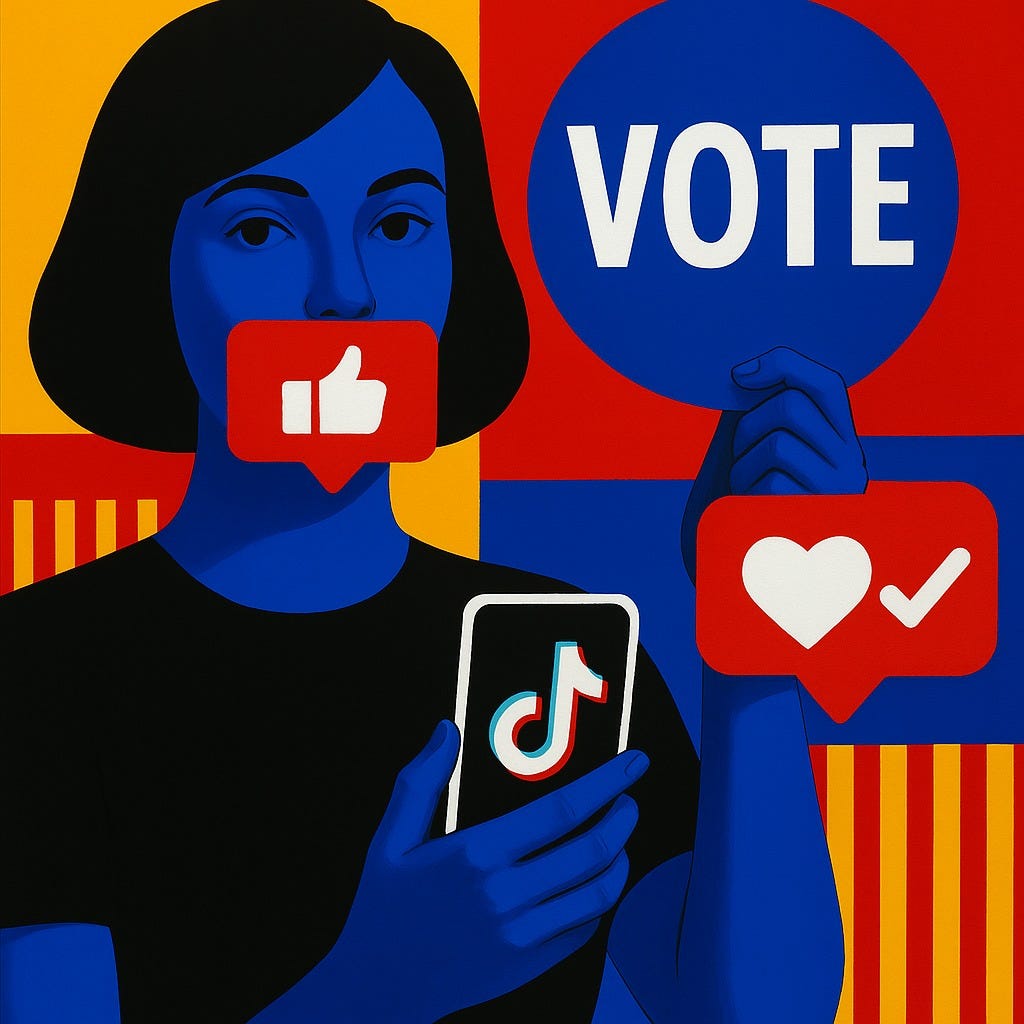
From Joe Rogan to Grandma’s Potatoes: Social Media Is Priming the Planet for Populism

By Irina Branescu, originally published on Pilot Lights.
Once upon a time, political persuasion meant long speeches, debate stages, and maybe a dramatic scandal or two. Most mainstream politicians of today grew up in that era; they learned their skills in public halls or on local television channels.
This is a different world. Those platforms are now obsolete, the ability to master them is worthless. What matters now is algorithmic priming: the process by which every phone scroll turns into a vote — one that you never even realize you’re making.
Welcome to politics in the age of social media, TikTok Lives, AI bots, and monetized outrage.
First, what is priming?
In psychology, priming is when prior exposure to a stimulus subtly alters your response to a subsequent one. In politics, it’s the art of pre-conditioning a voter to react emotionally or cognitively to a specific narrative — even if they don’t know it.
It used to be hard to pull off. You needed focus groups, expensive TV buys, and lots of patience. Now? All it takes is a few hundred AI-powered TikTok accounts pushing the same emotional triggers on loop, and suddenly a speech about national dignity lands like gospel.
Joe Rogan is just the start.
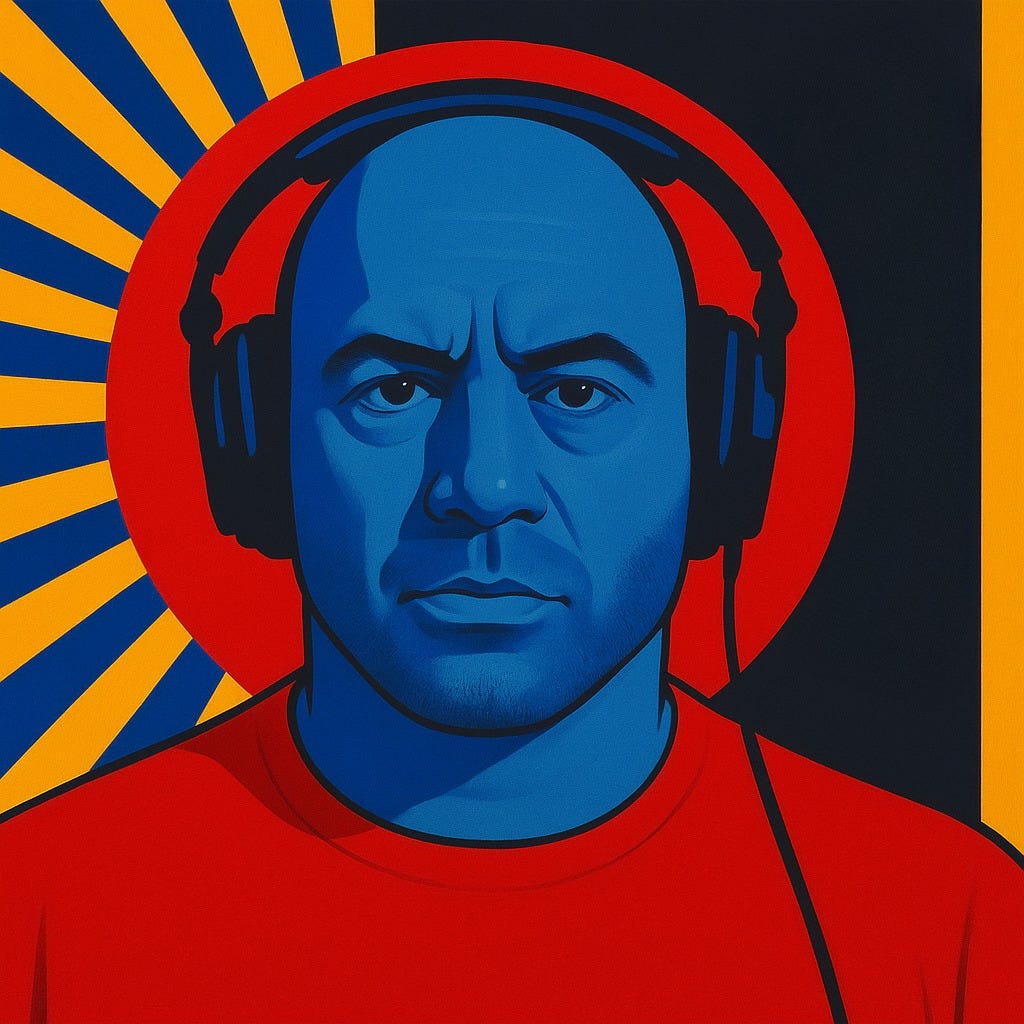
In 2025, Joe Rogan reaches over 22% of U.S. adults weekly. That’s more than CNN, MSNBC, or Fox in prime time. But this isn’t just a right-wing phenomenon.
On the right: Christian nationalist TikTokers spread “biblical prophecy” politics with gift incentives and “pray & vote” live sessions.
On the left: progressive micro-influencers weaponize cancel culture, flooding feeds with viral shame loops and emotional outrage over language, identity, and climate.
Same mechanism. Different trigger words. Because social media doesn’t inform — it primes. You’re not thinking. You’re reacting — on cue.
The new political arena
Unlike traditional videos or posts, TikTok Lives are not saved or archived by the platform. Once the stream ends, it disappears. No evidence, no accountability, no traceable quotes.
In these Lives, users aren’t just passive viewers. They comment, they send gifts, they join challenges. They vote emotionally, again and again, before they ever enter a real polling booth. And they’re rewarded for it.
TikTok has effectively turned political expression into a game, where reactions are instant, emotional, and incentivized.
Scalable and silent
What the recent Romanian presidential elections showed is that you don’t need to win mainstream attention to dominate a narrative. You just need volume, emotion, and timing.
Flood the algorithm with repetitive content.
Trigger outrage or empathy (preferably both).
Use fake and real accounts to simulate popularity.
Reward engagement with gifts, games, and emotional belonging.
And boom. You’ve manufactured consent.
The potato was more than a meme
In November 2024, Romania held a presidential vote. Călin Georgescu, a far-right outsider with pro-Russian leanings, shocked the country by leading the first round with 23% — despite previously polling at just 5%.
On December 6, the Constitutional Court annulled the election — a first in the EU and likely unprecedented in modern democratic history — citing large-scale foreign interference and illegal online funding.
But Georgescu’s rise didn’t come out of nowhere. His emergence had been carefully primed.
For nearly a year, obscure channels circulated memes, voiceovers, and even astrology content invoking “Baba Vanga prophecies” about a mysterious nationalist leader rising in Eastern Europe. Without naming him, they emotionally prepared parts of the electorate to believe in his inevitability.
As the campaign progressed, social media was saturated with micro-targeted, emotionally charged content: anti-elite anger, religious fear-mongering, nationalist nostalgia. TikTok was just the most visible tip of a coordinated iceberg.
When Georgescu was barred from re-entering the race, he returned during the second round with a now-famous speech. He didn’t rage — he invoked humility, sacrifice, faith, and delivered a line that struck oddly deep:
“There are still children who eat only boiled potatoes every day, sometimes not even those, while others demand jeans and foreign vacations.”
To outsiders, it sounded bizarre. To his base, it felt like prophecy fulfilled. Because for months, AI-generated content had already planted the image: children too poor for birthday cake eating only potatoes, grandmothers cooking over open fires, entire families surviving on nothing but potatoes. The “potato” wasn’t just a food — it had become a symbol, embedded through repetition and emotion.
That’s how priming works. And this was just one example.
This doesn’t end in Romania
What happened in Romania in 2024 wasn’t a glitch. It was a preview.
In the U.S., priming on social media is platform-native and deliberately subtle: micro-influencers repeating phrases like “they’re coming for your kids” or “this is our last chance”, visual priming with looping clips of gas prices and crime footage, emotional baiting, and algorithmic exposure that ties economic hardship to the party in power.
In India, priming operates through encrypted intimacy: WhatsApp forwards blending faith, fear, and identity, audio clips mimicking casual family chats that build emotional allegiance long before any manifesto is heard.
In Brazil, priming takes the form of faith-wrapped performance: evangelical pastors run nightly TikTok Lives — they cry, pray, quote scripture — then quietly suggest which candidate was “sent by God.” By the time that name appears on the ballot, the reaction isn’t political — it’s spiritual reflex.
This isn’t propaganda as we once knew it. Old propaganda was top-down, televised, and could be fact-checked. This is interactive. Emotional. Disappearing. TikTok Lives aren’t archived. WhatsApp can’t be traced. Telegram is encrypted. By the time you realise what’s happening, you’ve already been primed.
Romania showed us what it looks like when that priming succeeds. But the algorithm is global. And it votes before you do.

Is democracy dead?
Not yet. But it’s gagged, gaslit, and glowing under a ring light — whispering “double tap if you agree.”
Takeaways
Social media didn’t replace TV — it replaced your gut feeling.
Priming is now platform-native, emotional, and exponential.
TikTok Lives are the new ballot boxes — untraceable, unregulated, unforgettable.
And when a candidate starts talking about potatoes or other random stuff that strangely moves you? You’ve already been primed.